
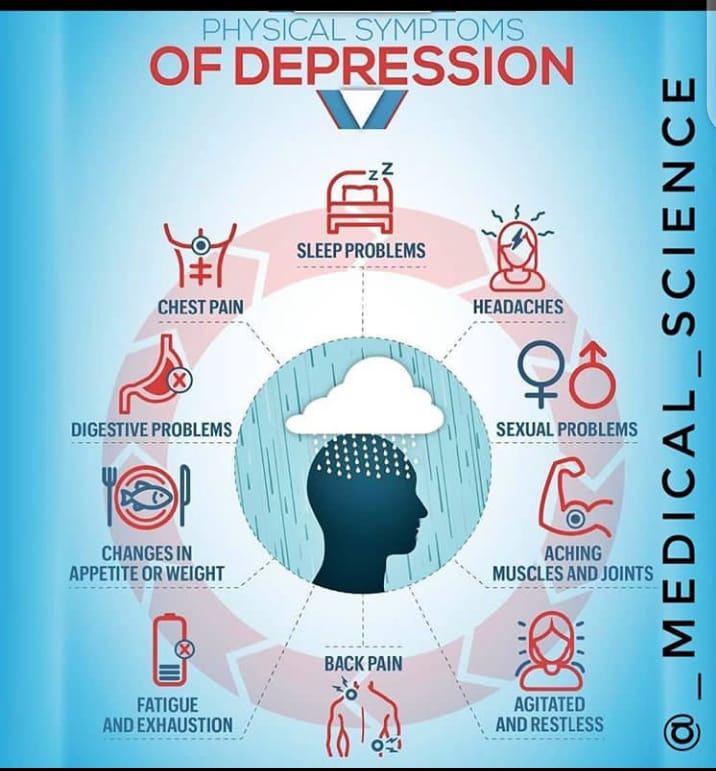
Benefits of Exercises To Depression

Exercise. Take a 15- to 30-minute brisk walk every day — or dance, jog, or bike if you prefer. People who are depressed may not feel much like being active. But make yourself do it anyway (ask a friend to exercise with you if you need to be motivated). Once you get in the exercise habit, it won’t take long to notice a difference in your mood.
In addition to getting aerobic exercise, some yoga poses can help relieve feelings of depression. Try downward-facing dog or legs-up-the-wall pose (you can find these poses on yoga websites). Two other aspects of yoga — breathing exercises and meditation — can also help people with depression feel better.Nurture yourself with good nutrition. Depression can affect appetite. One person may not feel like eating at all, but another might overeat. If depression has affected your eating, you’ll need to be extra mindful of getting the right nourishment. Proper nutrition can influence a person’s mood and energy. So eat plenty of fruits and vegetables and get regular meals (even if you don’t feel hungry, try to eat something light, like a piece of fruit, to keep you going).Identify troubles, but don’t dwell on them. Try to identify any situations that have contributed to your depression. When you know what’s got you feeling blue and why, talk about it with a caring friend. Talking is a way to release the feelings and to receive some understanding.
Once you air out these thoughts and feelings, turn your attention to something positive. Take action to solve problems. Ask for help if you need it. Feeling connected to friends and family can help relieve depression. It may also help them feel there’s something they can do instead of just watching you hurt.Express yourself. With depression, a person’s creativity and sense of fun may seem blocked. Exercise your imagination (painting, drawing, doodling, sewing, writing, dancing, composing music, etc.) and you not only get those creative juices flowing, you also loosen up some positive emotions. Take time to play with a friend or a pet, or do something fun for yourself. Find something to laugh about — a funny movie, perhaps. Laughter helps lighten your mood.Try to notice good things. Depression affects a person’s thoughts, making everything seem dismal, negative, and hopeless. If depression has you noticing only the negative, make an effort to notice the good things in life. Try to notice one thing, then try to think of  one more. Consider your strengths, gifts, or blessings. Most of all, don’t forget to be patient with yourself. Depression takes time to heal.
Health Benefits of Garlic

  • Garlic Contains Compounds With Potent Medicinal Properties
    Garlic is a plant in the Allium (onion) family.

It is closely related to onions, shallots and leeks. Each segment of a garlic bulb is called a clove. There are about 10–20 cloves in a single bulb, give or take.

Garlic grows in many parts of the world and is a popular ingredient in cooking due to its strong smell and delicious taste.

However, throughout ancient history, the main use of garlic was for its health and medicinal properties.

Its use was well documented by many major civilizations, including the Egyptians, Babylonians, Greeks, Romans and Chinese.

Scientists now know that most of its health benefits are caused by sulfur compounds formed when a garlic clove is chopped, crushed or chewed.

Perhaps the most famous of those is known as allicin. However, allicin is an unstable compound that is only briefly present in fresh garlic after it’s been cut or crushed.

Other compounds that may play a role in garlic’s health benefits include diallyl disulfide and s-allyl cysteine.

The sulfur compounds from garlic enter the body from the digestive tract and travel all over the body, where it exerts its potent biological effects.


* Reduction of Blood Pressure.

Cardiovascular diseases like heart attacks and strokes are the world’s biggest killers.

High blood pressure, or hypertension, is one of the most important drivers of these diseases.

Human studies have found garlic supplements to have a significant impact on reducing blood pressure in people with high blood pressure.

In one study, 600–1,500 mg of aged garlic extract was just as effective as the drug Atenolol at reducing blood pressure over a 24-week period.

Supplement doses must be fairly high to have the desired effects. The amount needed is equivalent to about four cloves of garlic per day.

  • Help in Detoxifying Heavy Metals in the Body

At high doses, the sulfur compounds in garlic have been shown to protect against organ damage from heavy metal toxicity.

  • Boost Immunity
    In test tubes, garlic appears to kill cancer cells, and studies involving people show some of the same outcomes. According to the Iowa Women’s Health Study, involving 41,000 middle-aged women, those who routinely ate garlic, fruits and vegetables had a 35% lower colon cancer risk. Benefits came from raw and cooked garlic – not supplements.

A four-week study in employees of a car battery plant (excessive exposure to lead) found that garlic reduced lead levels in the blood by 19%. It also reduced many clinical signs of toxicity, including headaches and blood pressure.

Three doses of garlic each day even outperformed the drug D-penicillamine in reducing symptoms.

*Improve better Skin and Hair

Garlic’s antioxidants and antibacterial properties can clear up your skin by killing acne-causing bacteria. Some data shows rubbing raw garlic over pimples can clear them away. Be aware, though, that it could cause a burning sensation on your skin.

* Treat Athlete’s Foot

Garlic also fights fungus. If you have athlete’s foot, soak your feet in garlic water or rub raw garlic on your feet to attack the itch-causing fungus.

Source:
Health line
Cleveland clinic

How To Identify Kidney Infections?

How do you know when a UTI become a kidney infection?

Kidney infection are also termed as Pyelonephritis where the bacterial or viral infection can cause infection and is a type of UTI.

The kidney play an important role in the human body. They are a part of the Urinary Tract where it removes waste from the body. The Urinary system comprises of the kidney, ureter, bladder and urethra. If any part of the Urinary system gets infected, then the bacteria or virus can travel to the ureter and result in kidney infection.

Kidney infection results in an excruciating, painful sensation that usually occurs due to UTI. Kidney Infections are not so serious if treated on time with antibiotics, however, if they are not treated on time they can permanently damage the kidneys.

Kidney Infections came within an hours. You feel like having being fatigued, fever, sick with back pain or pain over the sides. Along with the symptoms of kidney infection, patients usually suffer from Symptoms of UTI. For example, Cystitis where they have frequent urges to urinate, burning sensation or painful sensation during urination, cloudy or smelly pee and urine might contain blood. You can also suffer from stomach pain, loss of appetite, vomiting and nausea.

Kidey infections occur due to a specific bacteria e.g E-colli which travel in to the urethra, the urinary tube which carries the urine from the body.

In normal situations, E-colli stays within the bowel without causing any harm but they can transfer to the sexual genitals if you don’t wash and wipe the area after urinating. Kidney Infections can also occur due to skin infections that can enter the blood stream and travels towards the kidneys. Kidney infection can occur at any age and in any gender but it is more commonly in a women. This is because women have a shorter urethra which makes it easier for the bacteria to transmit to the kidney easily. It is more commonly seen in younger women, pregnant ladies are at high risk to suffer from kidney infections as they are at risk to suffer from UTI. It is also because they are undergo frequent hormone changes during pregnancy and also because the baby puts extra pressure over the bladder of the mother resulting in a slow flow of urine from the body.

You can always suspect UTI becoming a kidney Infection if you are suffering from such symptoms, you need to consult your healthcare provider immediately so that they can follow your medical history, perform a physical examination and advise you with the urine test to check whether you have UTI. The doctor might advise you with urine analysis, CT scan, Ultrasound, urine culture and others.

Treatment of Kidney Infection

Kidney infections need immediate treatment with antibiotics to prevent the further progression of the disease. Antibiotics are required to prevent further progress of infection as it might damage the kidneys and spread within the blood stream. Pain killers are also advised for kidney infection as the patients suffering from severe pains. However, if you have a chronic medical condition then you might need hospital care so that they can treat you with antibiotics in the form of Intravenous.

Complication of Kidney Infection

Kidney infection can results in complications like permanent kidney damage, blood poisoning or septicemia, severe infections or complications during pregnancy. It is therefore essential to consult your healthcare provider without any delay and follow their treatment plan.

Design a site like this with WordPress.com
Get started